



Clinical research assistants contribute to British Medical Journal publication
1/07/2025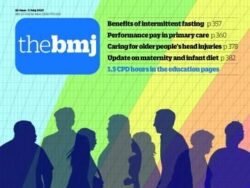 Diego Grandi and Benjamín Cruzat, assistants at the Universidad de Valparaíso School of Medicine’s Clinical Research Incubator, participated in the preparation and drafting of the article ‘Beyond Body Mass Index: Rethinking Doctors’ Advice for Weight Loss,’ which was published in The British Medical Journal (BMJ). The article was co-authored with Dr. Juan Franco, a CIESAL associate researcher and long-time collaborator of our team, from the University of Düsseldorf. Researchers from the universities of Roskilde and Copenhagen in Denmark also contributed.
The publication, which was featured on the cover of the BMJ, directly criticises the use of body mass index (BMI) as the primary metric in health recommendations. It points out that lifestyle changes intended to promote weight loss show minimal long-term benefits and do not reduce cardiovascular events or mortality in overweight or obese people. The study emphasises that traditional interventions such as restrictive diets and increased physical activity result in an average weight loss of only 1.8 kg after two years, with no significant impact on cardiovascular complications or mortality. Furthermore, the authors warn that a weight-focused approach can fuel stigma and discrimination, even in childhood, where negative attitudes towards larger body sizes are already evident.
The authors propose a more integrated approach to the clinical management of obesity, which considers not only biometric factors, but also the psychosocial, behavioural and structural aspects that influence body weight.
Making healthy food accessible
‘It’s time for our focus on health to go beyond weight,’ say the authors, proposing a person-centred approach to care that considers healthy habits, well-being and individual preferences rather than solely on the weighing scales as a measure of progress.
They point out that public health policies that reduce barriers to exercise and facilitate access to healthy food could be more effective than individual interventions focused on weight loss. They also urge caution regarding the use of obesity medications, which, while they may reduce weight, carry side effects as well as the risk of regaining weight after treatment is stopped. ‘Providing good healthcare does not mean ignoring weight, but rather prioritising what is important to each patient, minimising harm and avoiding the reinforcement of a stigma that affects mental and physical health,’ they conclude.


Diego Grandi and Benjamín Cruzat
The Clinical Research Incubator programme brings together professors and teaching assistants from two subjects within the medical degree programme: Research Methodology and Evidence-Based Medicine. In this incubator, students learn critical analysis and scientific writing and deliver regular presentations to the student and teaching community. This allows them to receive mentoring for their future academic development. They are also encouraged to develop international collaborations throughout the world.