


CIESAL researcher becomes an active member of international GRADE groups
4/10/2025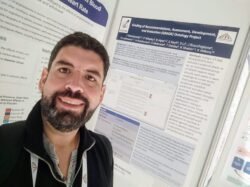 Dr. Javier Bracchiglione, a researcher at CIESAL and an academic at the Universidad de Valparaíso School of Medicine, has recently established himself as a member of the international GRADE Working Group, one of the world’s most influential communities in the development of evidence synthesis methodologies and health recommendation formulation.
Dr. Bracchiglione is currently an active member of the GRADE Planetary Health Working Group and the GRADE Ontology Group, which are led by the renowned researchers Thomas Piggott and Brian Alper, respectively. This involvement is in addition to his collaboration with the GRADE group in Barcelona, further strengthening CIESAL’s presence in important international academic forums.
Recent publications in international journals.
During 2025, both groups that the UV researcher is involved in have reported significant advances in high-impact publications. The GRADE Planetary Health Working Group recently published an article in BMJ Leader. Although it is not yet an official GRADE document, it represents a milestone in reflecting on how the principles of evidence-based medicine can be applied to the challenges of planetary health.
The article analyses how global phenomena such as climate change, environmental degradation and the sustainability of health systems require new leadership approaches that can integrate scientific evidence from multiple disciplines and inform public policy responses to complex issues.
Dr. Bracchiglione emphasised that ‘this work opens the door to integrating the planetary health perspective into the GRADE methodological framework, which will enable the development of future clinical practice guidelines and policy recommendations adapted to a global context of environmental crisis.’
The GRADE Ontology Group has published an official GRADE article in the Journal of Clinical Epidemiology. The article presents the GRADE ontology, which is an innovative proposal that seeks to formally and structurally organise the core concepts used in the process of evaluating and synthesising evidence. The development of the GRADE ontology is regarded as a fundamental step towards evidence-based digital medicine, in which recommendations can be integrated more flexibly, transparently and systematically in different contexts. According to Dr Bracchiglione, ‘the GRADE ontology represents a crucial advance in making scientific evidence not only available, but also accessible and effectively usable in decision-making processes, whether in clinical practice or in the formulation of public policy.’
CIESAL-UV’s international influence
Dr. Bracchiglione’s participation in these groups reaffirms the international standing of CIESAL and the Universidad de Valparaíso in the field of health research. Furthermore, given Dr. Bracchiglione’s connection with the GRADE group in Barcelona, it reinforces the link between Latin America and Europe in terms of collaborative research, opening up training and participatory opportunities for young researchers at CIESAL and the UV Faculty of Medicine.
‘For us at CIESAL, being part of GRADE is an opportunity not only to learn, but also to contribute to making health decisions around the world increasingly fair, transparent and sustainable,’ concluded Dr. Bracchiglione.