



CIESAL researcher delivers presentation at International Course on Paediatric Neurology and Psychiatry
23/06/2026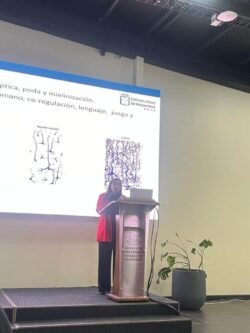 Dr Fanny Leyton, who holds a PhD in Psychotherapy and a diploma in Community Mental Health, is a senior lecturer at the School of Medicine at the Universidad de Valparaíso and a researcher at CIESAL. She took part in the 25th International Course on Paediatric Neurology and Psychiatry, which on this occasion focused on global health in neuropsychiatry. During the event, Dr Leyton addressed the topics of neurodevelopment, early relationships, and their impact on emotional regulation and children’s mental health.
Dr Leyton, who is also a member of the Millennium Institute for Research on Depression and Personality (MIDAP) and the Chilean Society of Child and Adolescent Neurology and Psychiatry (SOPNIA), noted during her presentation that the brain ‘awaits’ certain experiences that are essential for its development. These include human contact, co-regulation, language, play, and interpersonal synchrony. From this perspective, she emphasised that child development depends not only on individual factors, but also on the quality of relational experiences during the early years of life.
Dr Leyton also referred to the impact of maltreatment and early adversity, emphasising that these experiences not only increase psychiatric risk but can also directly alter brain architecture, connectivity and emotional processing. In this regard, she proposed that the changes observed in children exposed to trauma should be understood not only from the perspective of harm, but also as neurobiological adaptations that occur in response to threatening contexts.
Another key aspect of her presentation was her reference to secure attachment, as defined by John Bowlby, the founder of attachment theory. Secure attachment is a factor that promotes exploration, emotional tolerance, learning and physiological regulation, thereby reinforcing the central role of early bonds in human emotional development.
Leyton reflected on the impact of poverty and inequality on child development. She noted that these issues are not solely limited to material constraints, given that these contexts are characterised by stress, instability, overcrowding and violence. From this perspective, she emphasised the need to integrate clinical practice with social determinants and public policy to gain a more comprehensive understanding of the impact of these conditions on children. Finally, she stressed that, although early childhood can have a profound impact on a person’s future, it is also possible to recover through new relationships and corrective experiences.