


Academic and researcher Karina Cordero awarded scholarship by Universidad Federal de Río de Janeiro
28/07/2026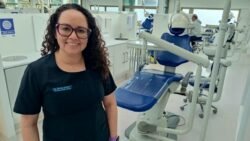 Dr Karina Cordero, a lecturer at our University’s School of Dentistry and a researcher at CIESAL, has been awarded a Doctoral Sandwich Scholarship by the Faculty of Dentistry at the Universidad Federal de Río de Janeiro (UFRJ). The scholarship will enable Dr Cordero to undertake a six-month international research placement, during which she will carry out a pilot study focused on predicting ameloblastoma, a highly complex odontogenic tumour. The study will use machine learning models to estimate the risk of recurrence and improve clinical decision-making.
The UV-educated specialist, who holds a master’s degree in Oral and Maxillofacial Pathology, was awarded the only available place in the latest open call for applications for this academic scholarship. Intended exclusively for foreign postgraduate professionals, the scholarship is offered annually by the Brazilian institution as part of the Capes-Global.Edu programme for professional development and international cooperation.
A Doctoral Sandwich Scholarship, also known as an Incoming Mobility Grant, is a form of financial support that enables international doctoral students enrolled in another country to undertake an extended research placement at a local host university or research centre.
The scholarship will enable Doctor Cordero to undertake her placement at the UFRJ School of Dentistry, as part of a pilot clinical study – for which she had to submit a proposal – on the prediction of ameloblastoma, a benign but highly aggressive odontogenic tumour that occurs in the jaw.
Due to the risk of recurrence, which depends on the interaction between multiple clinical, radiographic, histopathological and therapeutic variables, treatment usually requires extensive surgery and long-term follow-up. This has led to the use of machine learning models capable of integrating heterogeneous information.
“My aim is to develop and evaluate a supervised, parsimonious, reproducible and clinically interpretable machine learning model – not necessarily the most complex one – that estimates the risk of recurrence of intraosseous ameloblastoma, based on the specified variables available in the Oral Pathology Laboratory records at the UFRJ School of Dentistry,” explained the CIESAL researcher.