


Universidad de Valparaíso team leads child mental health project in schools in Chile and Ecuador
27/05/2026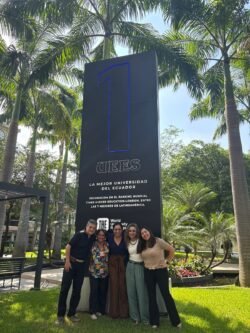 A team of researchers led by Dr Fanny Leyton and Dr Rubén Alvarado, who are both lecturers at the UV School of Medicine and researchers at CIESAL, is currently working on the ‘Raíces para la Vida’ (Roots for Life) project. This project aims to promote mental health literacy among children in school communities in Chile and Ecuador that are highly psychosocially vulnerable. This project builds on and expands the findings of the FONIS SA21L0143 study, which was completed in 2024. During that study, mental health literacy interventions were delivered to primary school teachers, demonstrating positive effects on their well-being and knowledge. The new initiative extends this work to include parents and guardians and will assess its direct impact on children, who are the ultimate beneficiaries of the intervention.
The project is being conducted collaboratively by teams from Chile and Ecuador, and involves educational institutions in Valparaíso, Chiloé and Guayaquil. As part of this project, the research team travelled to Ecuador in May to meet with Dr Sandra Muñoz and Dr Magdalena Aray, lecturers at the School of Medicine at the Universidad Espíritu Santo in Guayaquil, along with their team. The aim was to share experiences, train the local team in child mental health literacy and, in turn, learn about and take on board elements of their model for working with parents and guardians.
In general, highly vulnerable school communities in countries such as Chile and Ecuador face significant challenges relating to children’s mental health. These challenges are linked to social inequality, economic insecurity, exposure to chronic stress, difficulties accessing specialised services when needed and limited availability of tools for early detection and preventive intervention within the school setting. Fanny Leyton trained as a psychiatrist at the Universidad de Valparaíso, as an adult psychiatrist at the Universidad de Chile, holds a Master’s degree and PhD from the Pontificia Universidad Católica de Chile, and has led and contributed to various research projects on issues related to the mental health of children and adults. She says that these disparities affect not only children, but also teachers, families and educational teams, who often have to deal with complex emotional and behavioural issues without sufficient training or institutional support. “Strengthening mental health literacy in schools, families and communities is a key strategy for promoting well-being, preventing more serious difficulties and building more protective and inclusive school environments,” explains Dr Leyton.
Within this framework, collaboration between teams from Chile and Ecuador has not only enabled the exchange of experiences and methodologies, but also the joint review and adaptation of the assessment tools to be used in both countries. This ensures the validity of the tools for this multicentre, multicultural study.
This initiative is a significant step forward in supporting vulnerable school communities, equipping educators, parents and guardians with concrete tools to help them identify, address and prevent children’s mental health issues in a timely manner, thereby reducing the substantial psychosocial disparities affecting these school populations.